


This article originally appeared on Carpool Chaos. Read the live version & support her blog here →
If we’re praying for revival while living like rivals, maybe we’re praying the wrong prayer.
I heard it twice in one day.
“We need revival in this country.”
Both times I nodded in agreement.
Of course we do.
Our homes need it.
Our churches need it.
Our communities need it.
Our nation desperately needs God to move.
But somewhere between hearing it the second time and driving home, a thought settled into my heart that I haven’t been able to shake.
We can’t have revival while we’re still acting like rivals.
The more I thought about it, the more uncomfortable it became.
Because if we’re honest, Christians have gotten really good at fighting Christians.
Not the kind of sharpening one another that Proverbs talks about. I mean the kind that divides, labels, criticizes and pushes fellow believers away.
We pray for revival on Sunday morning, then spend Sunday afternoon arguing with other Christians on Facebook.
We ask God to unite a nation while refusing to unite with the church down the road because they worship differently than we do.
Something about that doesn’t add up.
🤝 Revival requires unity, not uniformity
Somewhere along the way, we’ve confused unity with uniformity.
They’re not the same thing.
Unity says, “Jesus is Lord.”
Uniformity says, “You have to look like me, worship like me and believe every secondary issue exactly the way I do.”
One is biblical.
The other… not so much.
Spend five minutes online and you’ll see it.
- Baptists debating Pentecostals.
- Pentecostals criticizing Catholics.
- Methodists disagreeing with Presbyterians.
- Non-denominational Christians correcting everyone.
- Arguments over worship music.
- Bible translations.
- Spiritual gifts.
- End-times theology.
- Dress standards.
- Politics.
- School choices.
Sometimes it feels like we’ve become experts at explaining why another Christian isn’t quite Christian enough.
Meanwhile, Jesus gave the world a completely different measuring stick.
“By this everyone will know that you are my disciples, if you love one another.” — John 13:35
Notice what He didn’t say.
He didn’t say the world would recognize us by our denomination.
Or our worship style.
Or our favorite preacher.
Or our ability to win a theological debate.
He said they would know us by our love.

📖 Paul warned the church about this long ago
If you think denominational arguments are new, read 1 Corinthians.
The church wasn’t dividing over denominations yet.
They were dividing over personalities.
Paul writes:
“Each one of you says, ‘I follow Paul,’ or ‘I follow Apollos,’ or ‘I follow Cephas,’ or ‘I follow Christ.’” — 1 Corinthians 1:12
Sound familiar?
Today it might sound like this.
“I follow this pastor.”
“I only listen to this preacher.”
“Our church teaches it correctly.”
“We’re the biblical church.”
Paul’s response still echoes through the centuries.
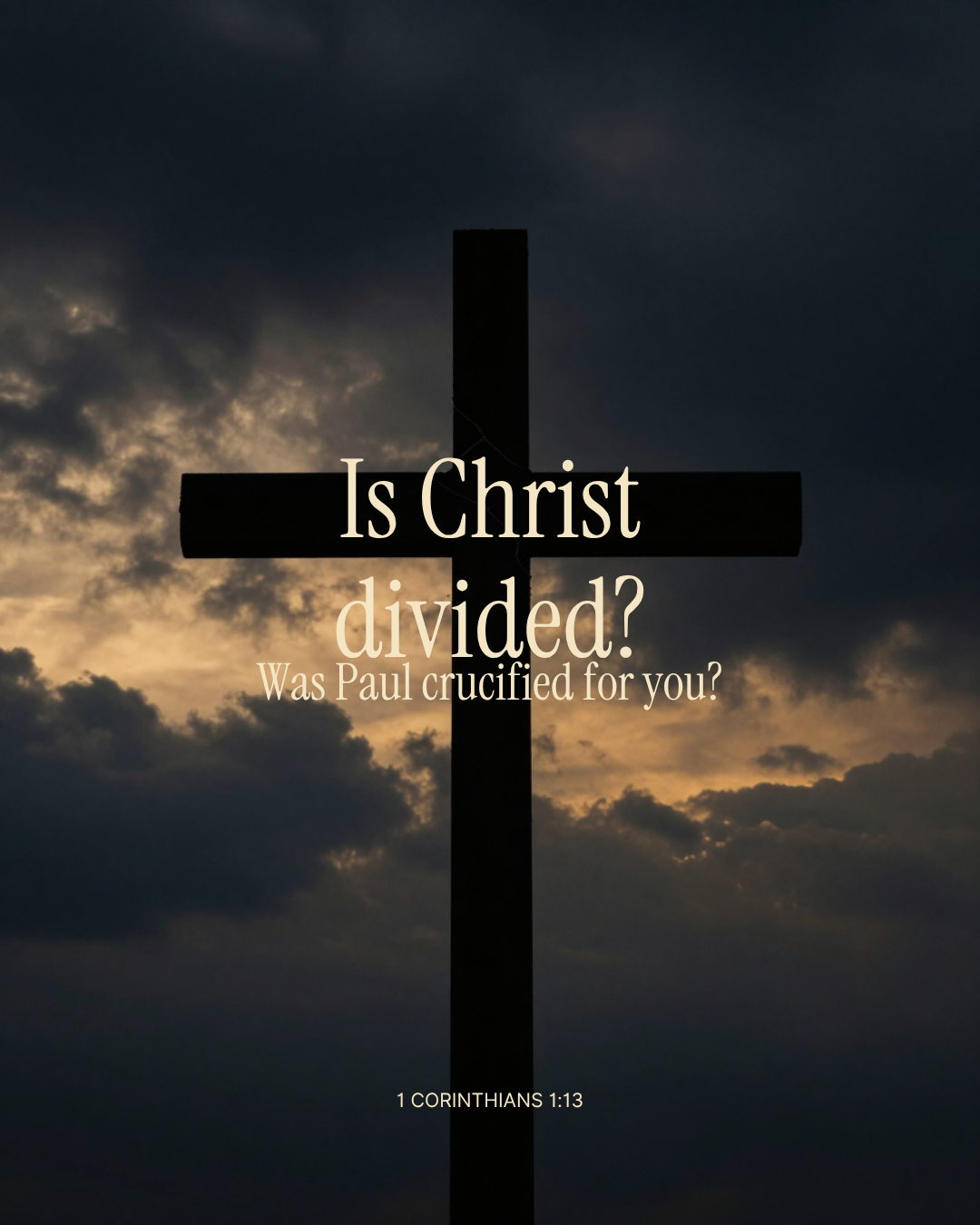
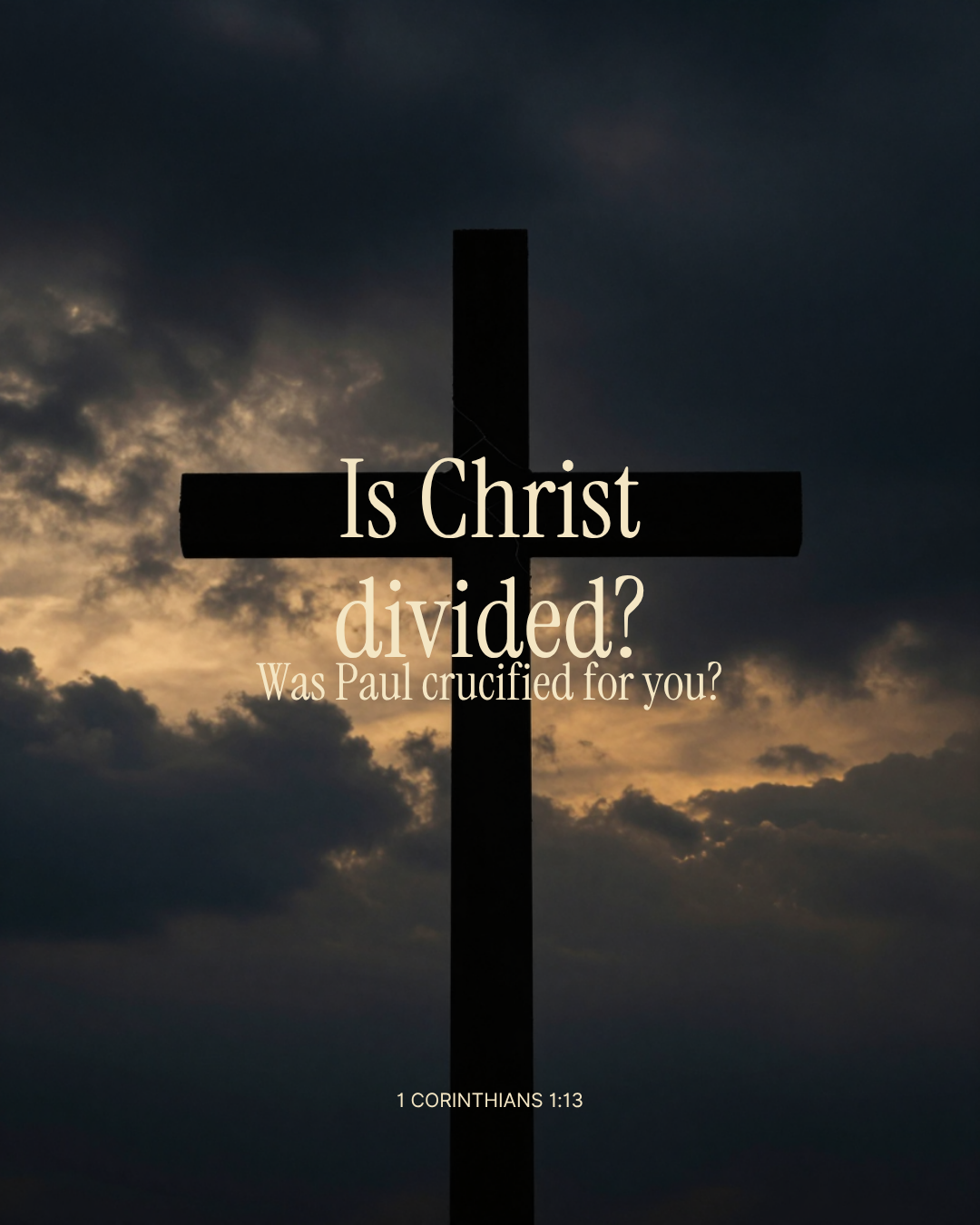
“Is Christ divided? Was Paul crucified for you?” — 1 Corinthians 1:13
Ouch.
Paul wasn’t telling them doctrine didn’t matter.
He was reminding them that Christ mattered most.
Some truths are worth standing on.
- Jesus is the Son of God.
- He died for our sins.
- He rose again.
- Salvation is by grace through faith.
- Scripture is God’s Word.
Those are non-negotiable.
But somewhere along the way, we’ve elevated traditions, preferences, and personal convictions to the same level as the Gospel.
Not every hill is Calvary.
Romans 14 reminds us that faithful believers can hold different convictions on disputable matters while still honoring Christ.
If God has placed a personal conviction on your heart, follow it wholeheartedly.
But remember…
Personal convictions aren’t universal commands.
Traditions can be beautiful.
They just aren’t the Gospel.
🏛️ Joshua almost watched God’s people destroy each other
One of my favorite stories about misunderstanding is found in Joshua 22.
The tribes of Reuben, Gad and the half-tribe of Manasseh had returned home after helping Israel conquer the Promised Land.
Before crossing the Jordan River, they built a large altar.
The rest of Israel heard about it and immediately assumed the worst.
They believed these tribes had abandoned God.
They gathered for war.
Think about that. God’s people were preparing to fight God’s people. Not because of idolatry. Not because anyone had rejected the Lord. Because of an assumption.
Thankfully, before drawing their swords, they asked a question.
The eastern tribes explained the altar wasn’t for sacrifices at all.
It was a memorial.
A reminder that although the Jordan River separated them geographically, they still belonged to the same God.
A conversation prevented a civil war.
I can’t help but wonder how many churches, friendships and ministries would still be thriving today if believers chose conversation before condemnation.
❤️ Jesus’ final prayer wasn’t for bigger churches
The night before Jesus went to the cross, He prayed one final prayer for those who would follow Him.
It wasn’t for larger congregations.
It wasn’t for better buildings.
It wasn’t for political influence.
It wasn’t even for revival.
He prayed this:
“That all of them may be one, Father, just as you are in me and I am in you… so that the world may believe that you have sent me.” — John 17:21
Read that again.
Jesus connected our unity to the world’s belief.
Our unity is part of our witness.
Not uniformity.
Unity.
The world isn’t expecting us to agree on every secondary issue.
But they should be able to see that we belong to the same Savior.
Imagine what would happen if the Church became known more for encouraging one another than criticizing one another.
Imagine if we spent as much energy praying together as we do debating each other.
Maybe that’s what revival actually looks like.
🌱 Maybe revival starts much smaller than we think
When most people picture revival, they imagine packed churches, overflowing altars and thousands coming to Christ.
I hope we see that.
But I wonder if revival starts somewhere much quieter.
Maybe it begins…
- …when we pray for the church across town instead of competing with it.
- …when we celebrate another ministry’s success instead of feeling threatened.
- …when we stop assuming the worst about believers who worship differently.
- …when pastors gather to pray instead of protecting territory.
- …when Christians become known more for grace than for criticism.
Revival probably doesn’t begin under bright lights.
It begins in surrendered hearts.
🚗 The Carpool Chaos Challenge
This week, instead of praying for revival “out there,” ask God what revival needs to look like in here.
Try one of these:
- Pray specifically for another church in your community.
- Encourage a pastor or ministry leader outside your own congregation.
- Refuse to participate in conversations that tear down other believers.
- Read John 17 and pray Jesus’ prayer for unity over your city.
- Ask yourself, “Is this disagreement about the Gospel… or just my preference?”
Revival doesn’t begin with someone else changing.
It begins when we let God change us.
🙏 Guided Prayer
Father,
Forgive me for the times I’ve been more interested in being right than reflecting Christ.
Search my heart and expose any pride, competition or division I’ve allowed to grow there.
Help me hold tightly to Your truth while showing grace to brothers and sisters who may worship differently, come from different traditions or hold different convictions on secondary issues.
Teach me to love Your Church the way You do.
If revival is coming, let it begin with me.
In Jesus’ name,
Amen.
💛 One last thing before we get out of the car…
I still believe America needs revival.
Desperately.
But maybe we’ve been asking God to send something we’ve been unwilling to prepare for.
Because revival isn’t just about what happens in a church service.
It’s about what happens between believers.
It’s about choosing love over pride.
Grace over suspicion.
Kingdom over preference.
Throughout Scripture, God’s people were strongest when they remembered whose they were.
And they were weakest when they turned on one another.
Rivals don’t build kingdoms. They destroy them.
So maybe the first step toward revival isn’t waiting for God to change the culture.
Maybe it’s allowing Him to change His Church.
Maybe revival begins the moment we stop acting like rivals…
…and start acting like family.
Enjoyed this devotional? Head over to Carpool Chaos to view her latest content, recipes, and resource links!